
You are about to visit a Philips global content page
Continue
According to the latest report from the World Health Organization and the World Bank Group (2025) on tracking universal health coverage, more than 4.5 billion people – that’s over half of the world’s population – lack access to essential health services. At the same time, around 2 billion people struggle to pay for healthcare, and hundreds of millions are pushed deeper into poverty each year simply because they seek treatment. When needs are this vast, fragmentation doesn't help. Impact grows from depth and discipline. We focus on strengthening healthcare systems in two critical areas, cardiovascular disease and maternal and child health, through three connected actions. We prove what works by testing solutions in real-world settings and designing for integration from day one. We scale what works through impact investments that help proven solutions expand sustainably, using catalytic capital to extend reach beyond single geographies and strengthen referral networks. We share what works by documenting evidence, translating lessons into practical guidance, and engaging partners so that proven approaches can be adapted and adopted elsewhere.
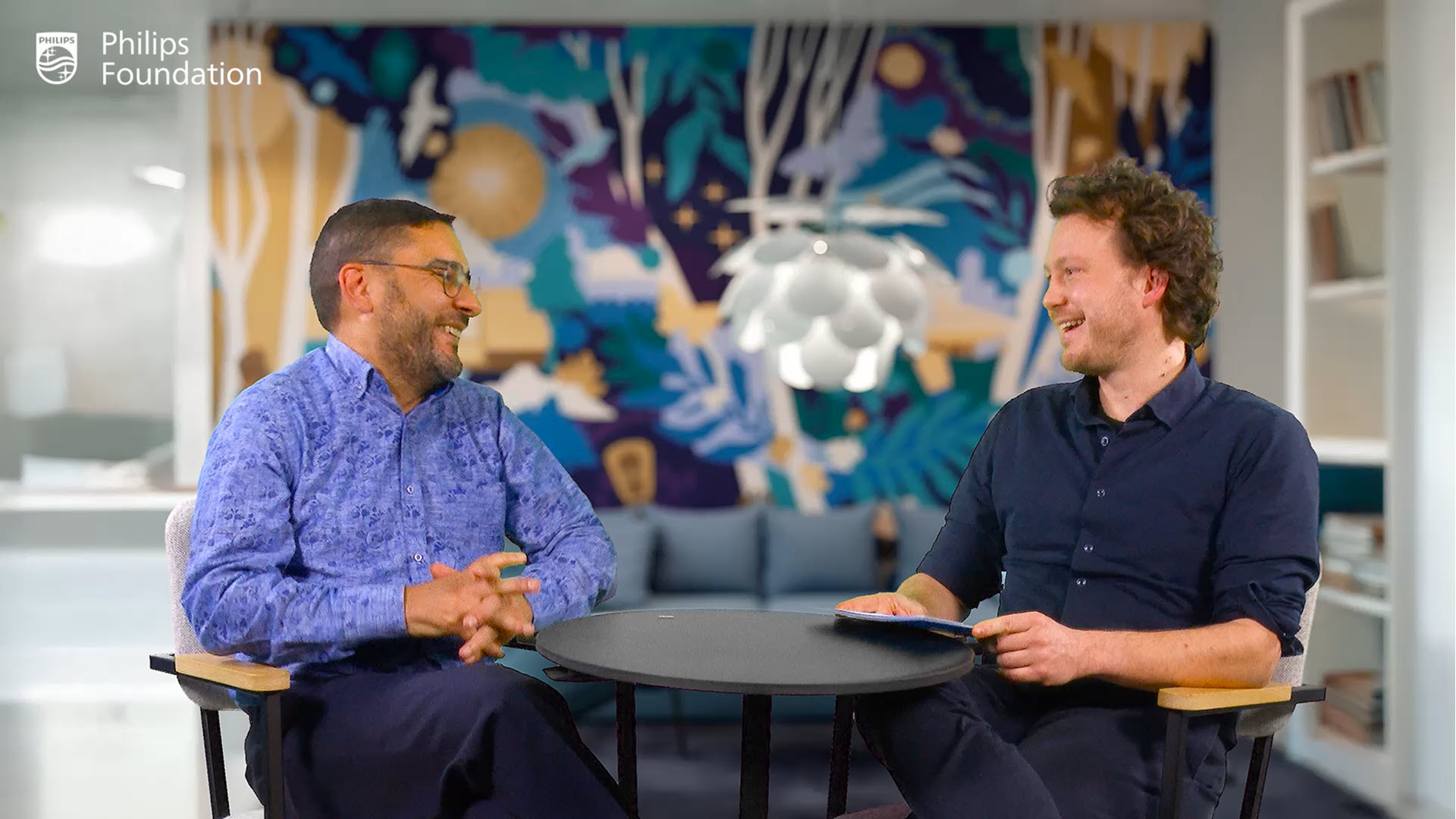
We spoke with Bahaa Eddine Sarroukh, Head of the Philips Foundation, about his personal journey and what it will take to strengthen referral systems across community and primary care. We also discussed why strategic focus matters more than ever when addressing healthcare access for underserved communities.
Every day, millions of people in underserved communities face the same barriers. Too few clinics, too few trained midwives to guide a mother safely through childbirth, too little capacity to catch a heart condition before it becomes fatal, or to respond when disaster strikes a community that was already struggling. Philips Foundation believes that with the right partnerships, the right funding, and the expertise within Philips, those barriers can be moved. Philips Foundation's focus today is how we make that work visible and credible, in particular in the field of cardiovascular disease and maternal and child health. To inspire others to join, replicate, and scale what is already proving to work. It builds on what the Philips Foundation is as a non-profit: a connector of an ecosystem of funders, investors, innovators and people working on the ground who share its ambition to reach 100 million people a year by 2030.
Philips Foundation’s 2025 Annual Report shows progress toward reaching 100 million people a year by 2030, with 69 million people gaining access to healthcare in 2025.
Philips Foundation is a registered charity in the Netherlands (ANBI).
Click here to access the 2024 ANBI Standaardformulier Publicatieplicht